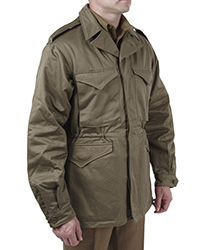
Description
 |
 |
 |
 |
 |
 |
 |
 |
| 370B details- long epaulets and 2 button flap hold down |
Spec labels | Olive drab no. 2 lining | Cuff gussets |
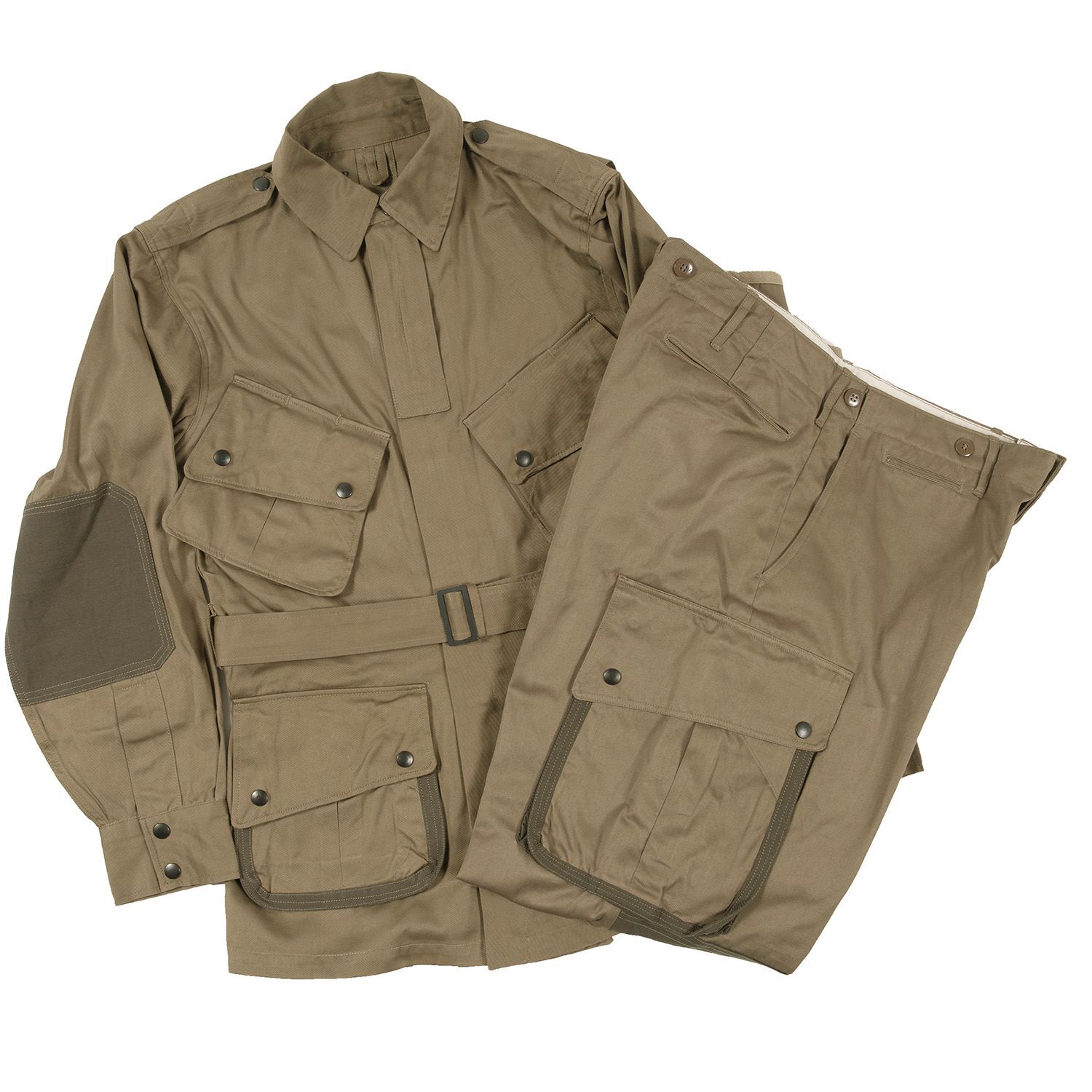
Reproduction of the first production WWII issue M1943 Field Jacket. Made directly from original July 1943 contract examples, using Teflon treated 100% cotton sateen cloth shells, lined with OD3 poplin, lower pockets reinforced with 3/4″ webbing and finished out with exact reproduction buttons.
Since few people actually wear them with a liner, the number one complaint about US field jackets has always been “they’re too big!”. So, we have recreated the early 370B to address that specific “problem”.
Field Jackets manufactured during the Summer and Fall of 1943, specs 370B and 370C, have a slightly closer cut than those made from 1944 to present. As soon as troops began receiving M43’s in large numbers (Fall 1943), they complained that the jackets were too tight when wearing the pile liners underneath. So, on Dec. 31, 1943, the QMC revised the patterns, increasing the chest measurements 2″ and 1″ to the circumference of the upper arms. This was called “Pattern B” and is stamped on the spec labels (or occasionally in the neck) so quartermasters could easily identify them during issue. The change was instituted after all 370B’s and a large percentage of the 370C jackets had already been completed and issued. These enlarged sizing proportions were used on all future models of M43/ M50/ M51/ M65 Field Jackets as well as most present day aftermarket coats.
Other features:
Water repelent: As with other armies of the period, the QMC spent a great deal of time and effort attempting to create wind and water proof fabrics for their field uniforms. The sateen of the M43 was a decent material, but there are simply limits to what cotton can do. In the 21st Century, we have more options available than they did in 1943. So, in order to increase the performance of our field jackets and trousers, we had the cloth treated with a DWR (durable water repellent finish) that’s colorless and does not change the feel of the fabric, but our uniforms now shed water as well as cotton possibly can. No, it wasn’t available in 1943, but it’s literally invisible. Yeah, I know- just knowing it’s there is bound to upset someone’s time warp. I think I hear a tiny violin somewhere…
Internal details: Like originals, our jackets have the double layered pocket lining as well as the 3/4 webbing under the jacket lining, running from the corners to the shoulder seam for more support when they are full of heavy items such as ammunition or grenades. The spec labels have the correct QMC information and stock numbers (aside from the bigger sizes that weren’t made in 1943.)
Care: We recommend hand or machine wash in cold water and hang dry. I experimented with washing on one of these- hand wash cold and hang dry resulted in zero shrinkage whereas machine wash and a dryer = 1.5 – 2 inches loss in sleeve and body length.
Shrinkage is about 1″ in the sleeve and body length. Shrinkage of the chest circumference is nil.
Sizing: These jackets are proportioned like most other jackets- they are not “slim fit” by any means. Unless one plans to wear a field jacket liner under the jacket, order your normal size. If one intends to use a liner underneath, go up one size as the liners are as thick as a Tanker Jacket.
Imported